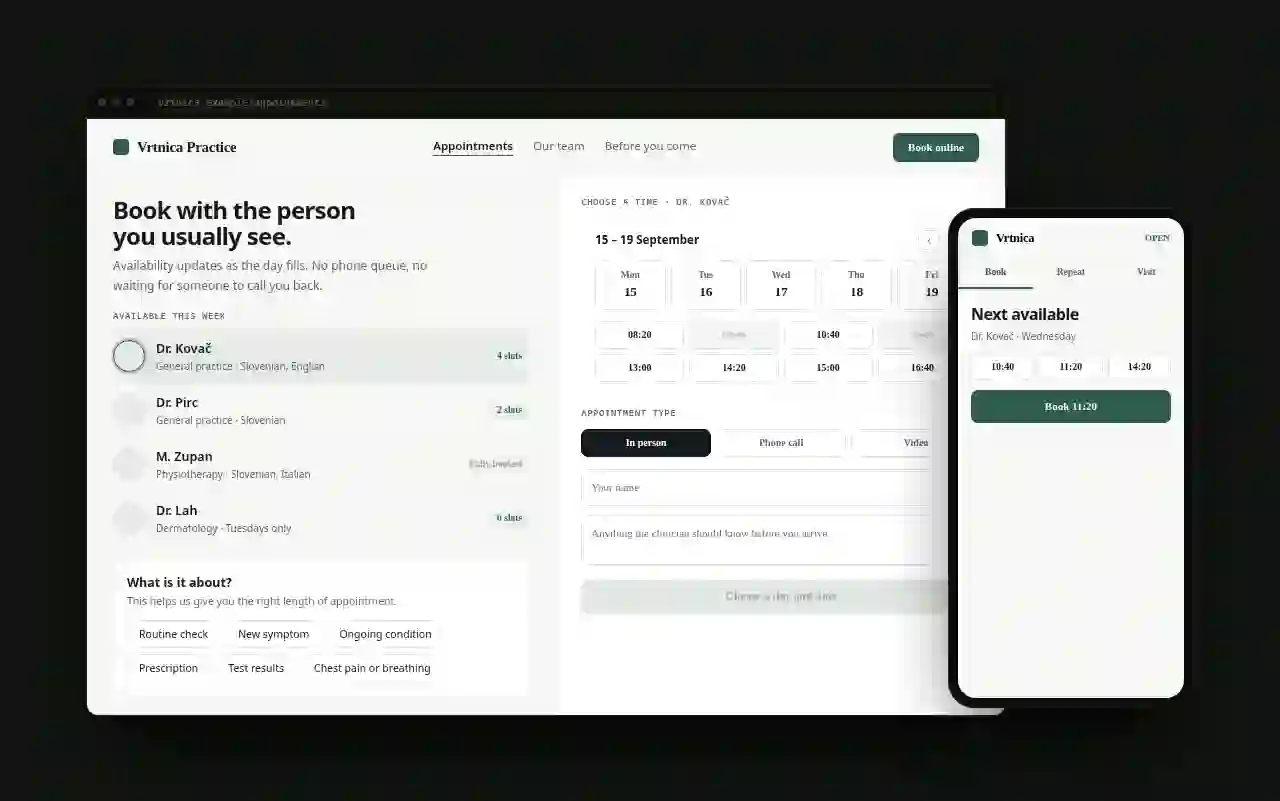
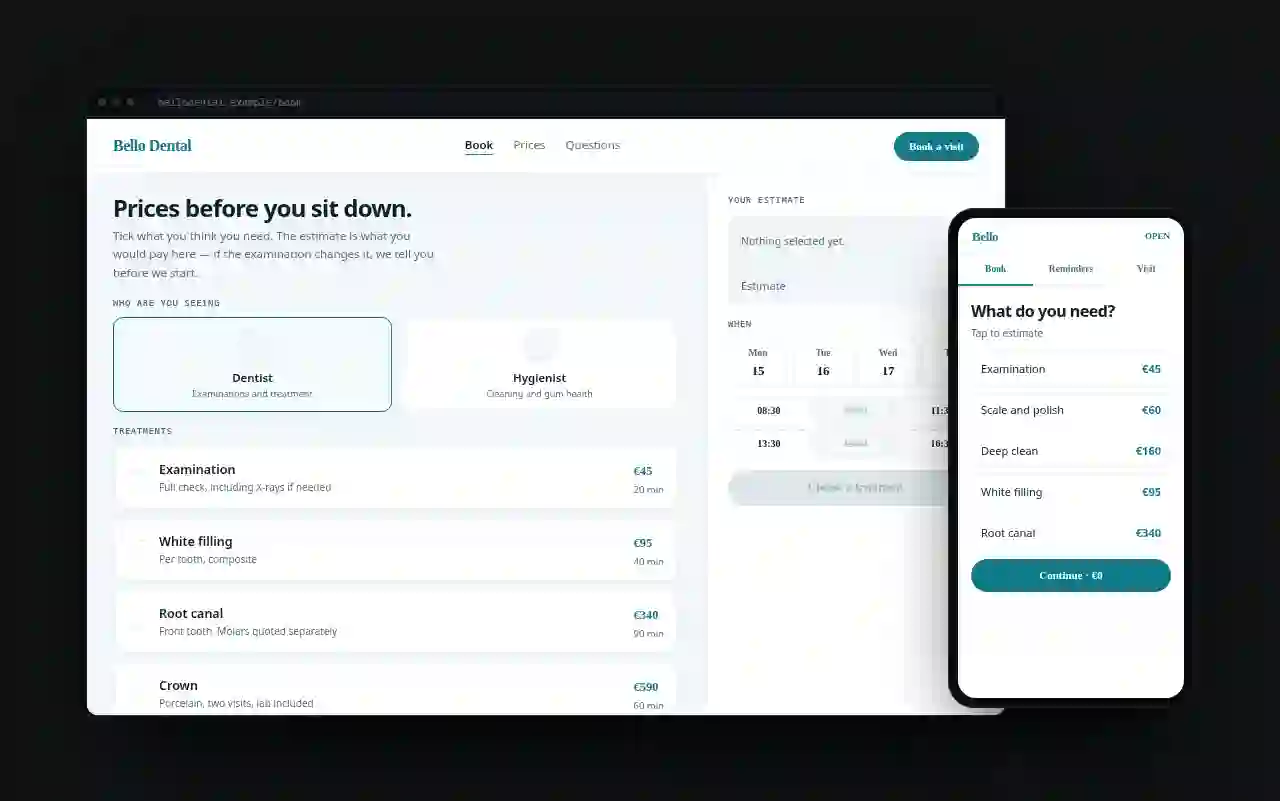
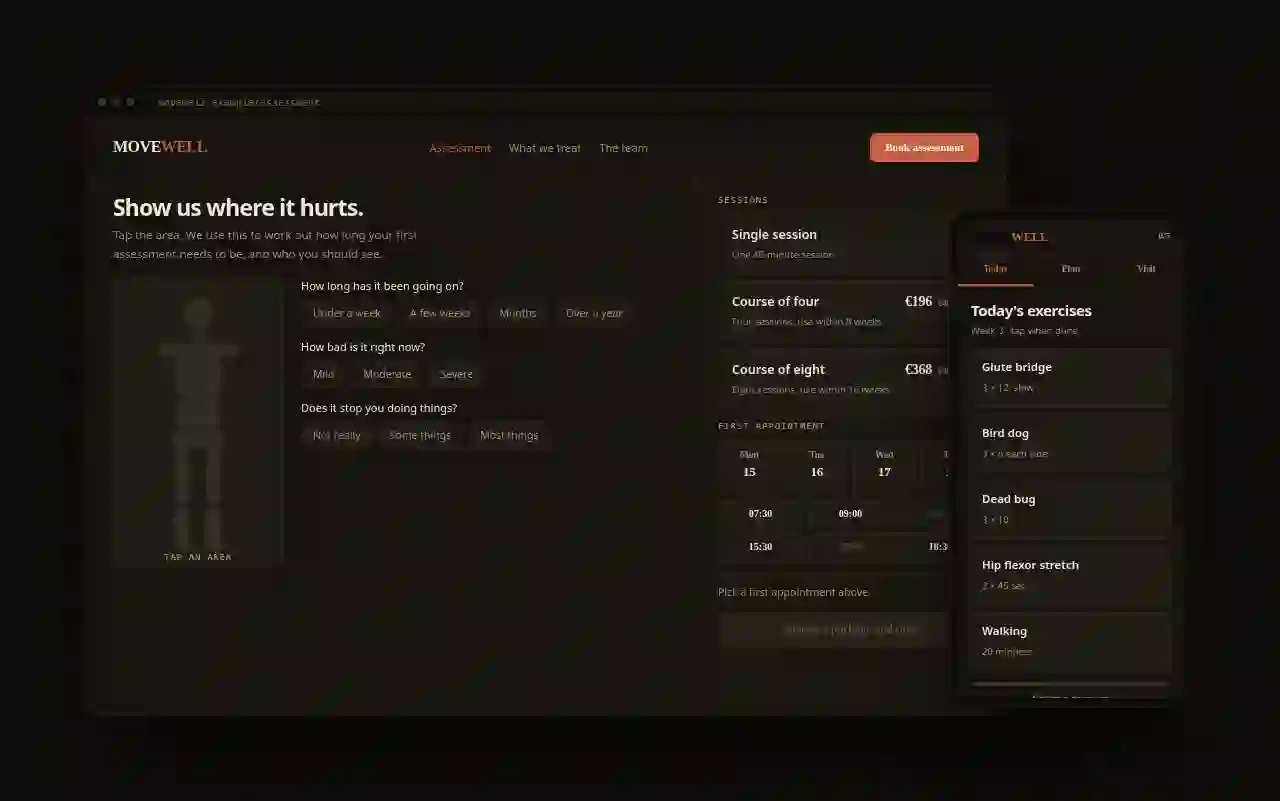
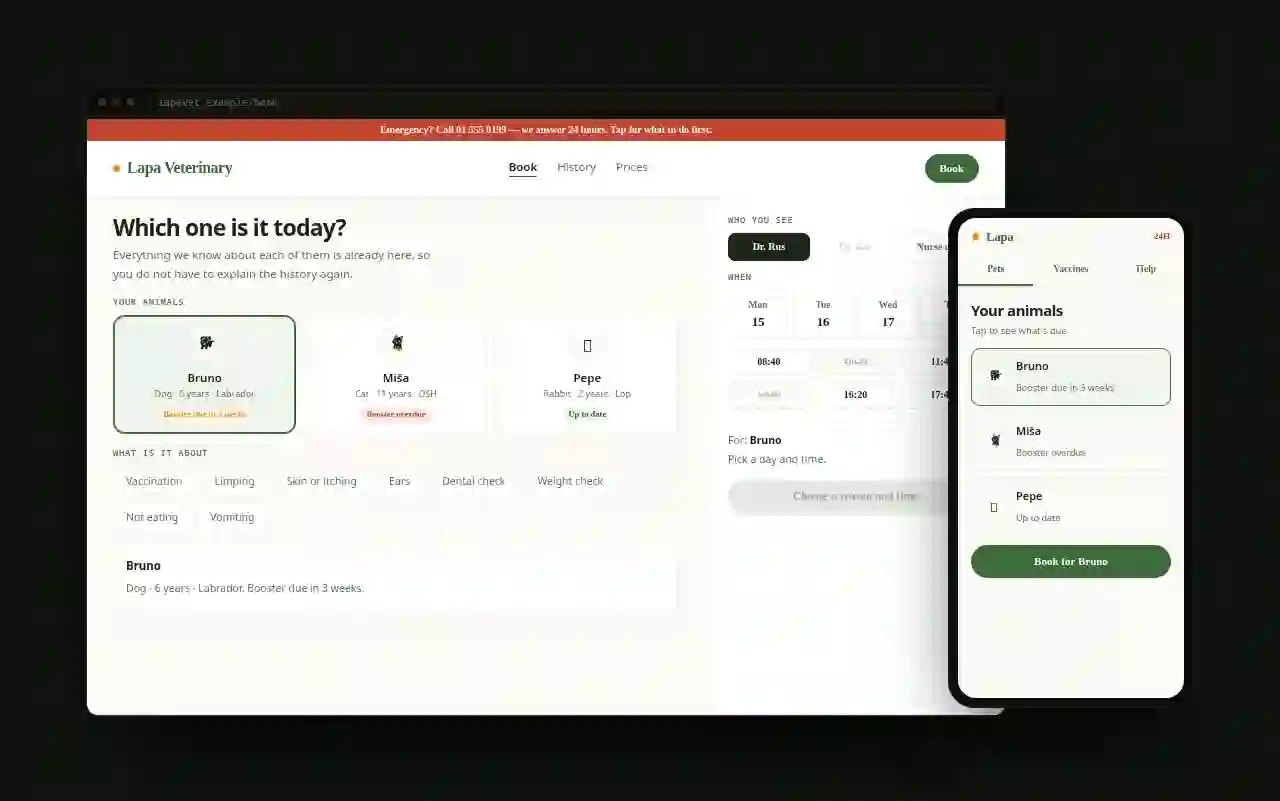
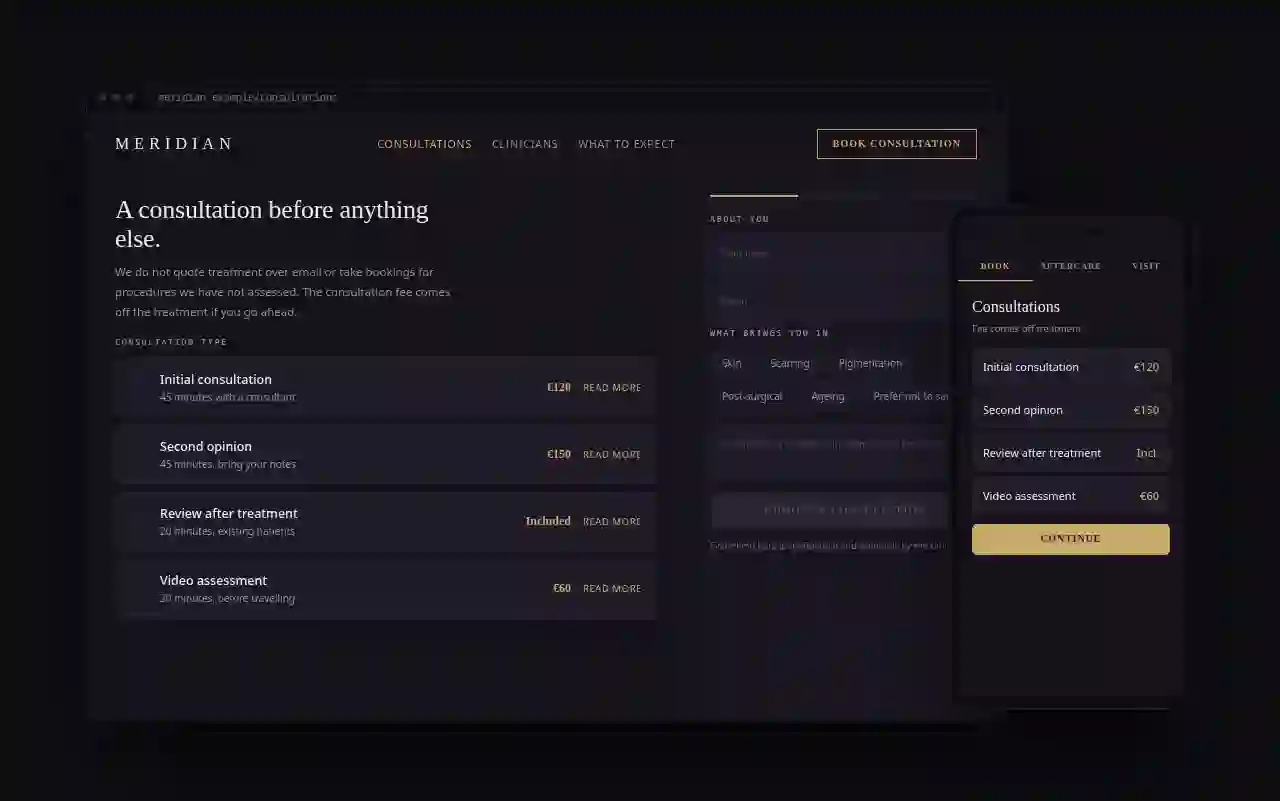
A family practice, a dental surgery, a physio studio, a vet and a specialist clinic. Same trade, nothing in common.
A practice website is judged on one measure: how many phone calls it removes. Reception time is the scarcest resource in a clinic, and most of it goes on three things — booking an appointment, asking what something costs, and requesting a repeat prescription. Each of those is a form, and each of those forms pays for itself within months.
The second job is triage. A patient choosing from a list of appointment types is telling you how long to book and who should see them, which is why every one of these builds asks what the visit is about before it offers a time. Get that right and the diary stops overrunning by mid-morning.
The third is trust, and it is mostly built by being specific. Naming the clinicians, publishing prices, saying that treatment is quoted before it starts, stating that the consultation fee comes off the treatment, describing the stairs and the parking — these are what convert an anxious reader into a booked appointment. Vague reassurance does not.
These five cover a family practice, a dental surgery with a live estimate, a physiotherapy clinic with a body map and a patient plan, a veterinary practice with a permanent emergency route, and a specialist clinic that books consultations only. Content in each is invented; your build follows your services, your team and your booking rules.