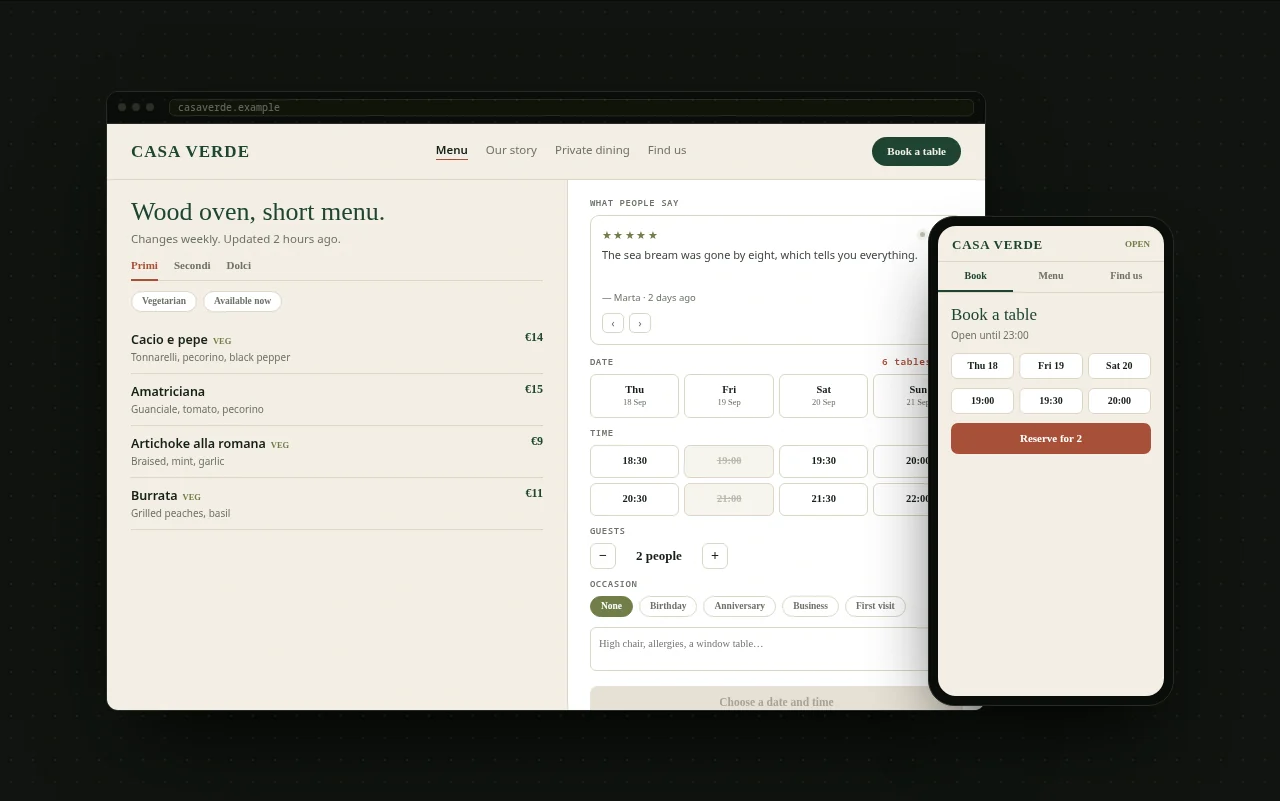
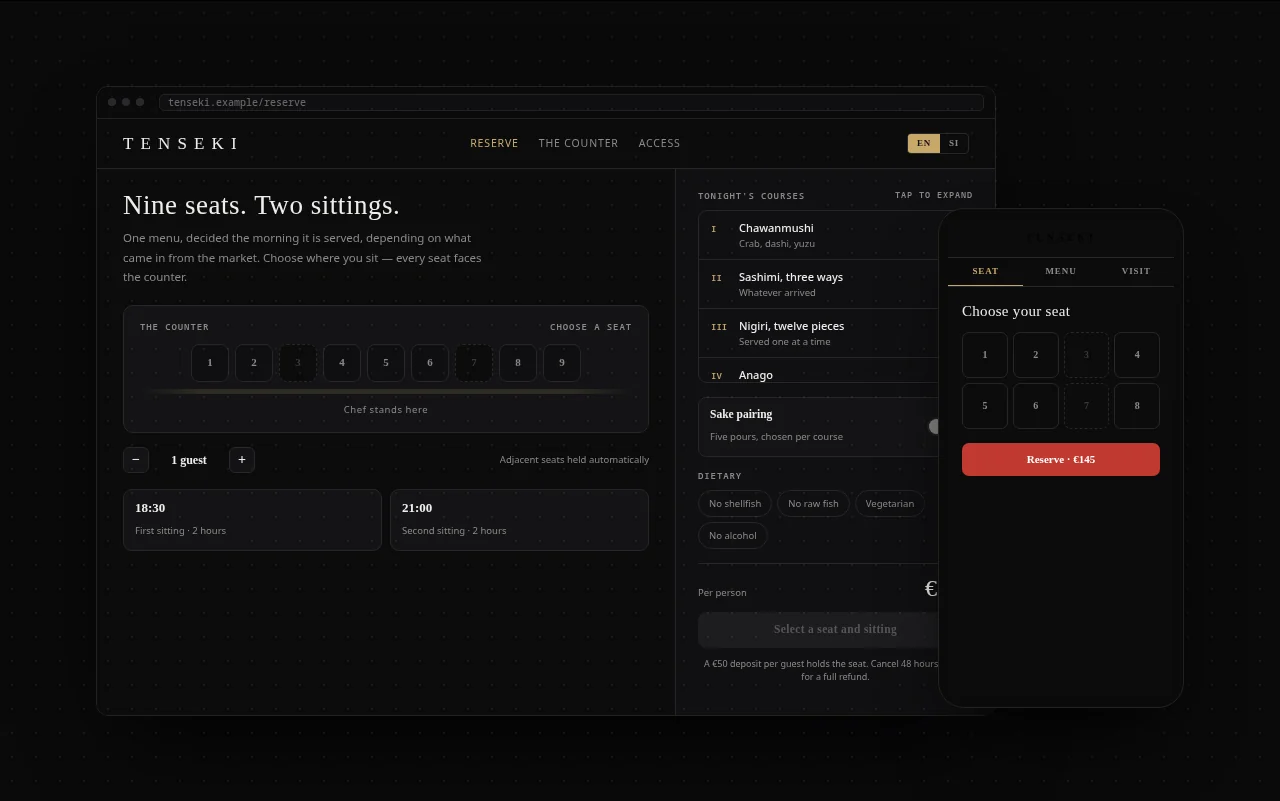
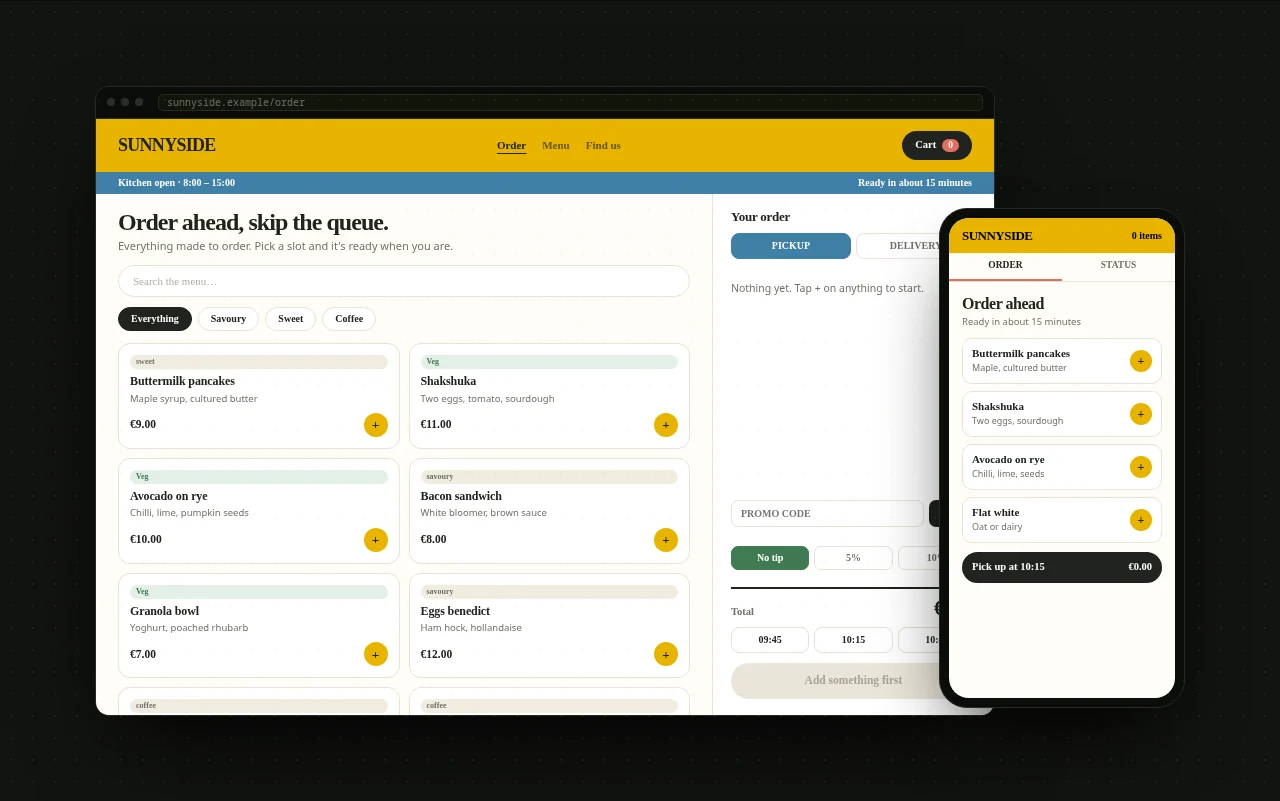
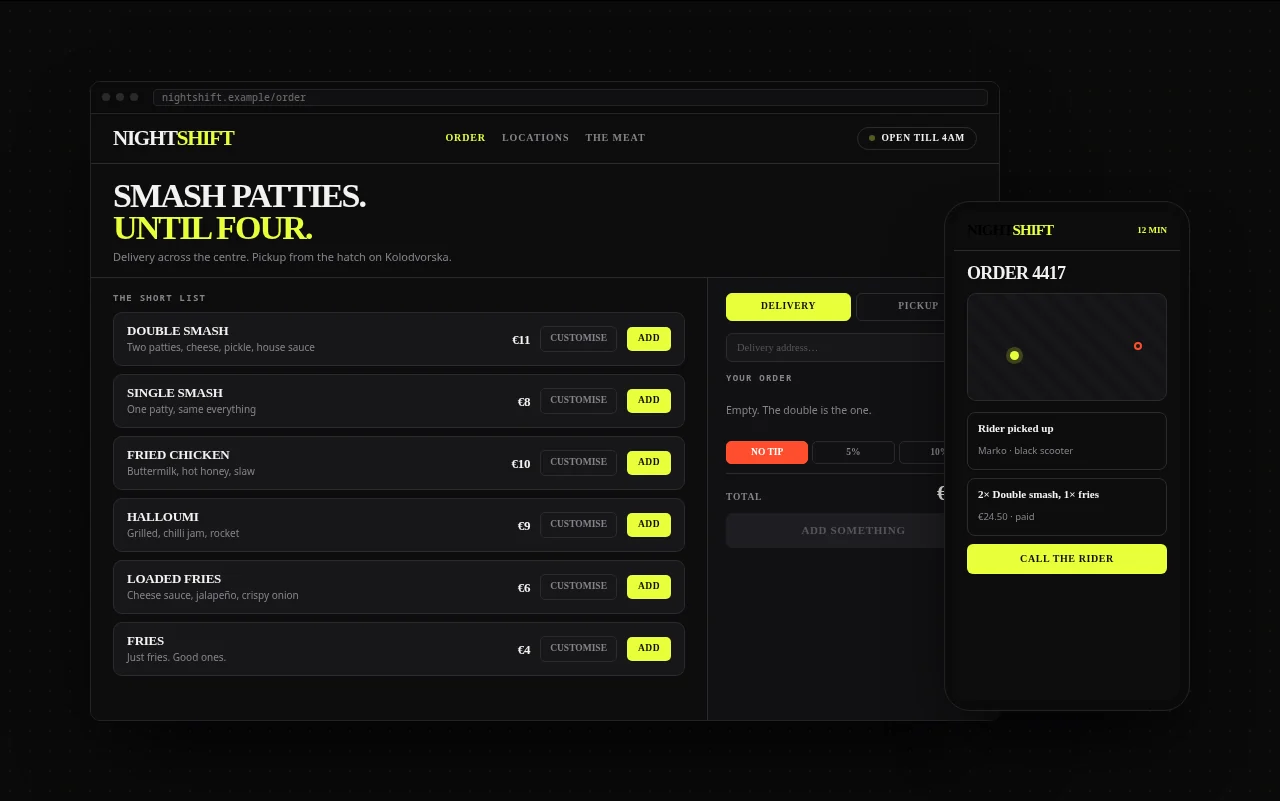
A trattoria, an omakase counter, a brunch café, a late-night delivery kitchen and a tasting-menu room. Same trade, nothing in common.
A restaurant website has about eight seconds to answer three questions: are you open, what are you serving, and can I get a table. Everything else — the photography, the story of the room, the chef's history — is read after those are settled, usually by someone who has already decided to come.
The hard part is that the answers change constantly. Menus move with the season and the market, tables fill on a Friday afternoon, a kitchen closes half an hour before the room does, and a delivery zone has a cut-off time. A site that cannot be edited by the person standing in the kitchen will be wrong within a fortnight, and a wrong site costs more covers than no site at all.
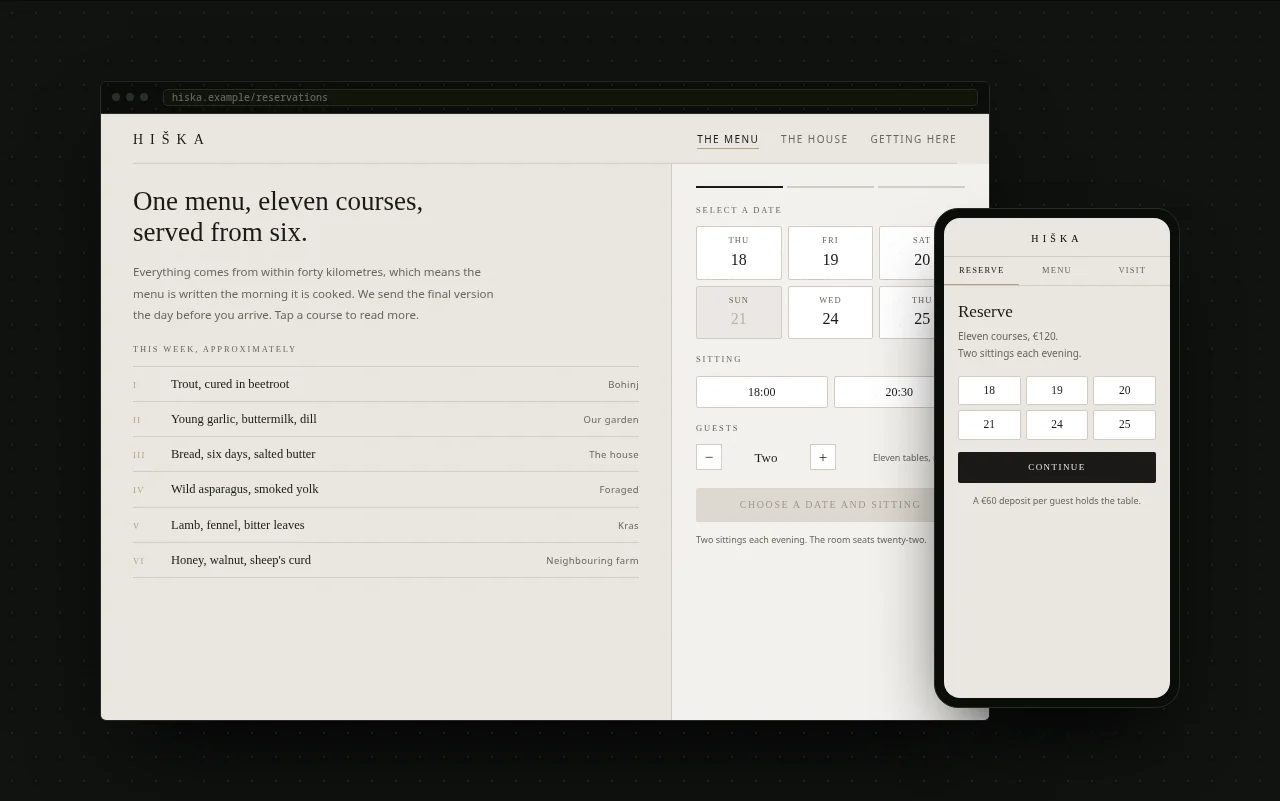
So these five builds are all built around one mechanism each: a weekly menu the kitchen edits, a seat plan for a nine-seat counter, a pickup slot with a live basket, a rider tracker for after two in the morning, and a staged reservation with a deposit. Same trade, five completely different machines, because a trattoria and a delivery hatch do not share a single operational problem.
Content in every example is invented. Your build follows your menu, your photographs and your booking rules — and the parts you need to change daily are yours to change, without calling us.